

Community, the Original LLM
How Other People Help Us Learn
I hate to admit this, but my memory is turning into the wayback machine. As in, I can only remember things from way back.
I recently stumbled upon a pre-pandemic photo of myself with Don Coscarelli, world famous director of one of my favorite horror movies of all time. Coscarelli is holding small metal orb outfitted with blades and a drill bit. We’re smiling.
As I stare at this photo, critique my outfit, it slowly dawns on me that, try as I might, I cannot recall the name of Coscarelli’s film, a film featuring murderous metal orbs (from a planet of Jawas) that terrorize anyone reckless enough to break into a sketchy funeral home run by a very Tall Man.
Even after describing the nonsensical plot to myself, I’m drawing a blank.
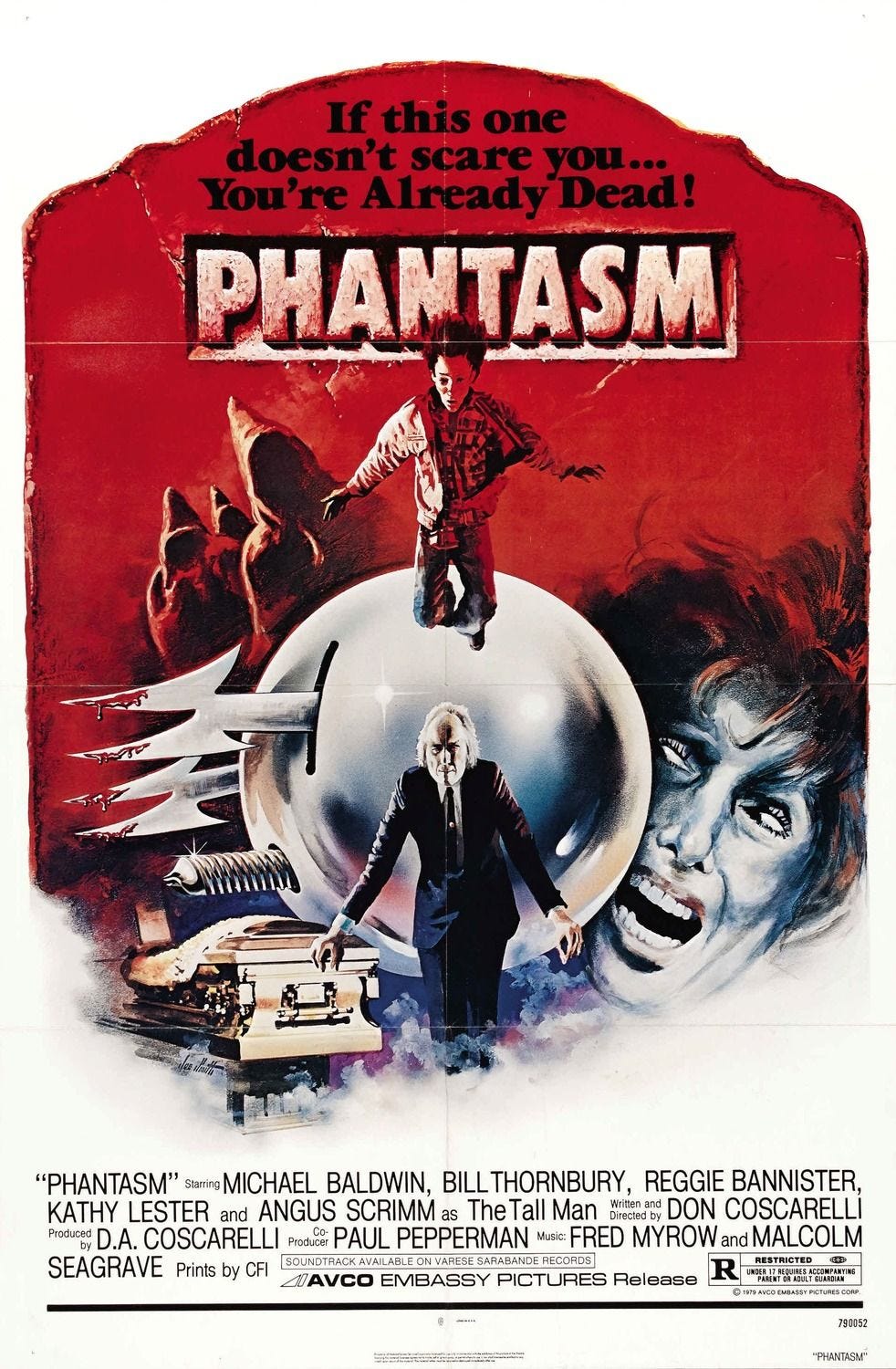
In the meantime, I have gained supernatural powers of recall.
From time to time, I’ll slip into mentally restaging a failed conversation. I’ll reach for a word, and it will come to me. In German. Or Turkish. Or, very rarely, Italian. Three languages I studied with focus and passion.
Anyone who has learned another language or was raised with many, knows that just because one language has a word/phrase that describes a particular concept doesn’t mean this word/phrase exists in another tongue. Which is one of the freaking amazing things about studying language.
But that’s not where I’m heading.
I’m not talking about sprinkling my rehash with the German equivalent of je ne sais quoi1 as I wave a cigarette about like someone in a Godard film.

I’m talking about spontaneous recall of foreign (to me) words that exist in English. Nouns I’ve been using since I started uttering sentences. For example, I’ll imagine someone has backed me into a rhetorical corner and my mind thinks Winkel. Corner, in German. Der Winkel. And yes, I had to look up the article. Sad.
Or, I’m staring out at the bird bath and spooning breakfast into my mouth when my mind whispers Ablaβhandel.2 The buying and selling of indulgences. Which is a word you might learn if you were reading about the Protestant Reformation in German.
It’s word that, decades on, has proven singularly useless and always conjures a particular classroom. A drawing on the page of a textbook, the too-small surface of my desk, sunlight streaming through the windows. Was it spring quarter when der Ablaβhandel first sent its tentacles into my cortex like an alien space pod bent on colonizing a human host?3
I’m certain there are infinite explanations for the holes in my memory, the plugging of other holes with long-forgotten words. What interests me at the moment is how I managed to memorize all the non-English words I learned as an adult.
In recent weeks I’ve been bombarded with alarming news articles, and stories from my own circles of acquaintance, that illustrate how we, the humans, are choosing to use AI like a Magic 8 Ball.
Remember those?
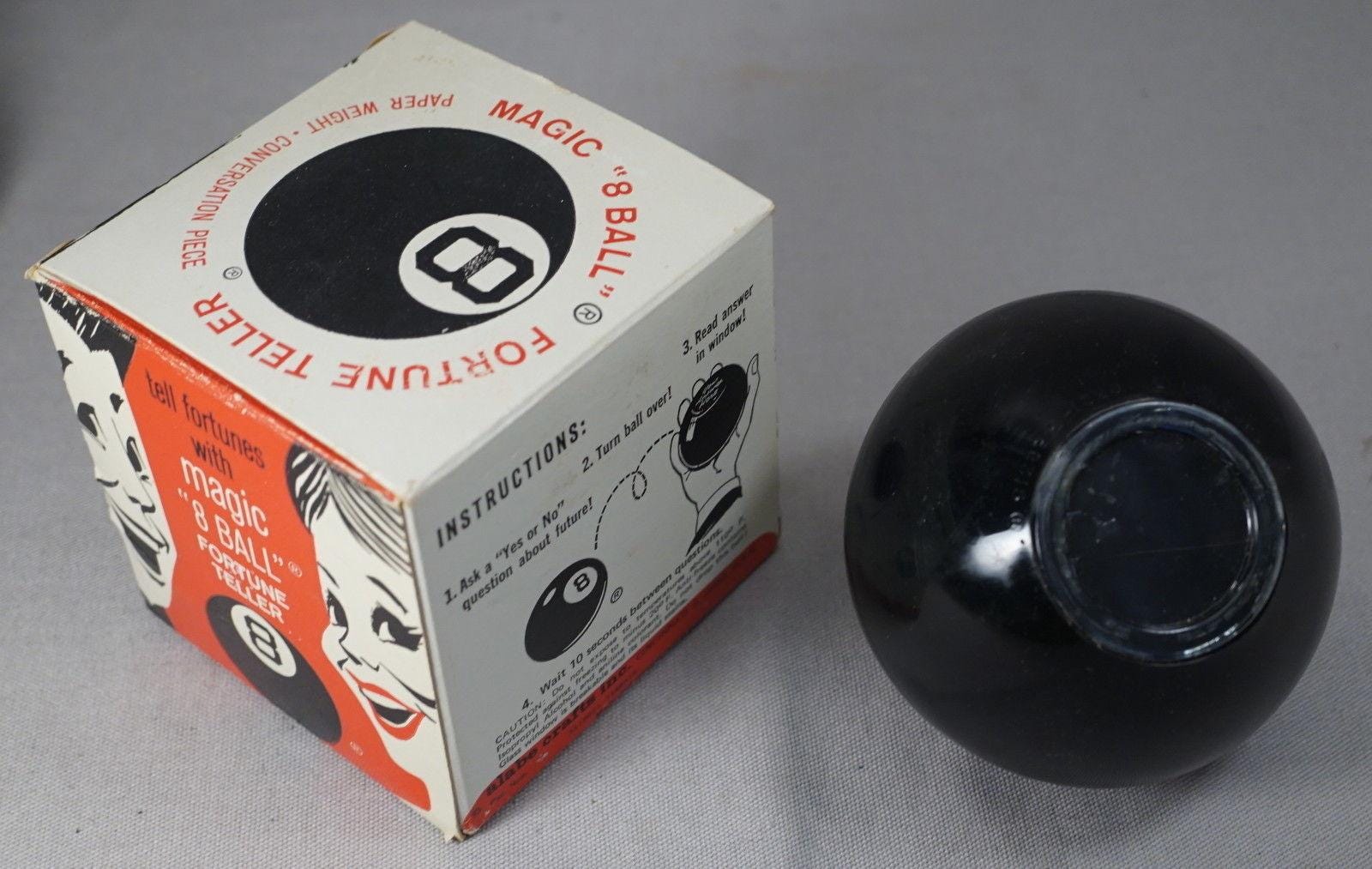
Perhaps we believe Claude, et al. differ from the 8 Ball because they’ve been built from vast a library of stolen writing plus everything on the Internet then smartened and honed by each successive inquiry posed by every person looking to hack their A1C. Or pack for a beach vacation.
The Magic 8 Ball can only field yes-or-no questions.
Yet, the person asking Claude if they should dump their partner and the sad teenager shaking the Magic 8 Ball on repeat until it tells her “Yes, definitely” or even, “Concentrate and ask again,” are both engaged in the same activity—not interacting with other humans.4
Now, don’t get me wrong. Learning how to have healthy relationships with people has been the hardest thing I’ve ever set out to do. If I hadn’t long since started motivating myself through trial and error and fire to turn to other people for help, support, love, and fun, I might be availing myself of the latest shortcuts to avoid them.
What does this have to do with language, Kirsten?
Well, I don’t remember acquiring my native language, but I’m certain I managed to learn a few others by being in life with people.
Often, when I think of a word I’ve learned, I’ll remember where I was, who I was with, and what I was feeling or doing when I finally got it.
Will I ever forget the word I learned in the days after the heartbreaking 1999 İzmit earthquake when, tearful and exhausted, I insisted on sleeping in my apartment instead of spending another night wandering the hot dusty streets of İstanbul and resting on park benches in the open where I would be safe, because everyone knew that both earthquakes and aftershocks only surprised you in bed at night?
I was too dysregulated to hear what my friends were muttering as they shook their heads, clicked their tongues, and deposited me at the door to my building. But I heard Ali.
“İnatçı,” he said.
I looked it up.5
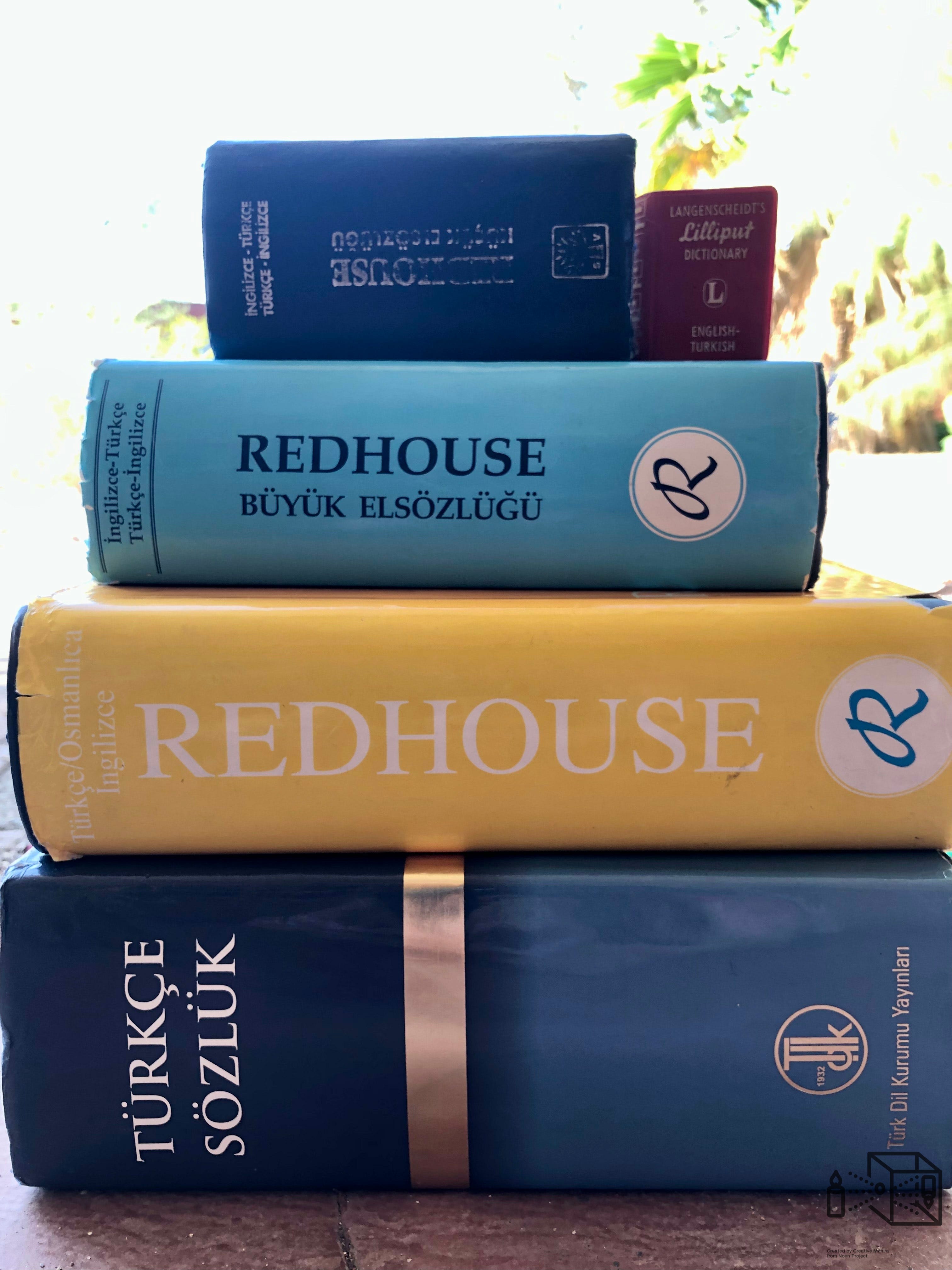
And so I’ve been wondering how typing queries into a computer instead of talking to a friend or therapist, studying online as opposed to interacting with a teacher in a classroom, impacts learning. And not just learning languages because, as someone is bound to helpfully point out, we don’t have to learn languages anymore. We have Google translate.
Last month we considered the radical idea that human consciousness reaches beyond our individual minds and participates in the creation of reality. Similarly, the theory of embodied cognition frees us from our cerebral cortices by postulating that the brain alone isn’t in charge of human cognition.6 Instead, bodily experiences—smelling the rain, tasting donuts, paging through a dictionary—shape human cognition and play a role in cognition-based functions including memory formation and recall.
Perhaps we knew this already.
In a visceral memory from my nineteenth year, I’m staring at the list of German prepositions taped to my dorm room mirror and shaking my shoulders to a rhythm of my own invention as I recite the dative prepositions. It worked. This embarrassing little dance and the rhythm of the words still come to me a bazillion years later.
Numerous studies invoke the power of movement as an aid to learning. Strategies range from singing with hand gestures to performing skits—instead of sitting in one’s seat and reading one’s part, a la 8th grade Spanish.
Drawing, but not in art class, is also impactful.
As cartoonist Lynda Barry taught us, we can coax the unconscious mind to release its treasures through drawing and writing by hand. In fact, moving a pen across the page taps a different part of the brain than typing does. Gesture and movement may be the key.
As I skimmed the studies, I flashed on my short career as a teacher of adolescents. I could have invited a bit more chaos into my teaching. Created more lessons built around “Hello, my name is” stickers and rearranging the furniture.
“Hello, my name is” stickers transformed my ESL students into Greek gods. As they gamely inhaled the brisk air atop Mt Olympus, I tasked them with arranging themselves into a tableau that expressed their relationships with each other and to the humans below.
On another occasion I asked my bewildered civics students, now state legislators, to leave their seats, propose a bill and escort one of their fellows—said bill—out of committee and onto to the floor for a vote. Would the bill reach the governor’s desk? Would she veto it? The suspense was killing us!
We were talking to each other!
Perhaps I’ve failed to convince you to make yourself vulnerable by phoning that friend who has a bit more life experience to ask for help with something you may have once taken to humans.
Consider this. The high levels of loneliness and depression we’ve all heard so much about aren’t problems of information access. They’re problems of connection. Or, lack thereof. Connection helps us learn all sorts of things, not just how to retain the words and grammatical constructs we once needed to pass a test.
The real test is underway.
Every time someone says “I asked ChatGBT…” I feel a little less necessary.
And every time someone says “I asked ChatGBT…” the skills I worked so hard to acquire seem a lot more magical.

I dedicate the love and effort and spirit I put into this month’s newsletter to all those impacted by the recent heartbreaking earthquakes in Northern Venezuela.
Ein gewisses Etwas.
I’ve been told that it’s no longer the done thing to italicize foreign words and phrases. I think it makes them easier to read. What do you think?
Invasion of the Body Snatchers reference. I prefer the original 1956 version to all the remakes. If it were October, I’d defend my choice.
…and trying to manage outcomes. A topic for a future post?
Stubborn, pigheaded.
Cognition: the act or process of knowing including both awareness and judgement. Webster’s 9th New Collegiate Dictionary.
I, too, believe that italicizing foreign words and phrases makes them easier to read. I'm also f*cking frustrated by rule changes that serve as evidence of how long I've been revising my memoir - like, so long that the rule change gives me one more thing I have to go back and revise (like adding a second S to make possessive a person's name that ends in S, when we *used* to only have to add an apostrophe). I do love learning different ways to express things by learning other languages, though. (ASL in particular and Korean lately, including Hangul to add to the dynamic.)
Thanks for your essay, Kirsten. So much more memorable to learn things/ words via another human. And risky. And surprising.
Your piece sparked a memory: years ago a girlfriend joined me to visit my Mom (z”l). Girlfriend, hoping to impress with her high school Russian, addressed Mom in her native tongue. Mom responded by answering at length in Russian. She was still answering ten minutes later. Until Girlfriend, her mouth dropping open, recognized the Russian Mom was reciting. She was quoting the first few chapters of Anna Karenina from memory.